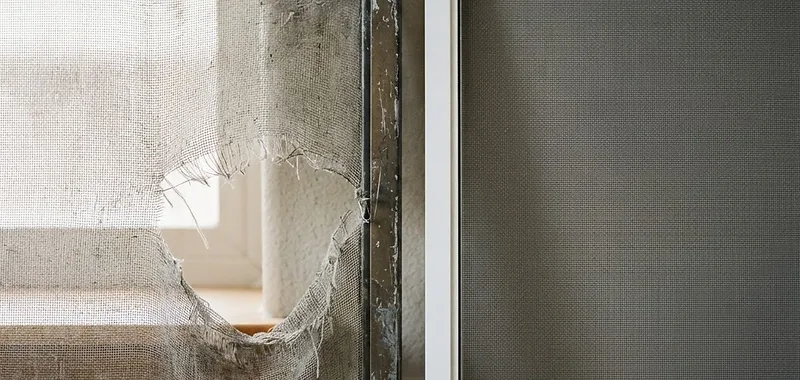
Window screens quietly do their job for years — until they don't. A screen that looks fine from across the room can quietly be letting in mosquitoes, sagging out of its frame, or growing brittle in the sun.
Knowing how long screens last — and spotting the early signs of failure — helps you replace them before bugs become a problem.
How Long Do Window Screens Last?
Lifespan depends almost entirely on the material and how much sun, moisture, and handling the screen sees.
- Fiberglass mesh — the most common in BC homes — typically lasts 7–12 years. It's affordable and flexible but degrades with UV exposure and tears easily.
- Aluminum mesh lasts longer — roughly 15–20+ years — but can dent and oxidize.
- Heavy-duty metal mesh (the pet- and pest-resistant kind we build with) can last 20+ years with proper care.
- Frames usually outlast the mesh, but plastic and vinyl frames can become brittle after a decade of sun exposure.
In short: a fiberglass screen near a sunny, south-facing window will fail far sooner than a metal-mesh screen in a shaded opening.
Signs It's Time to Replace Your Screens
You don't always need to wait for a gaping hole. Watch for these warning signs:
- Visible tears or holes — even small ones let insects in
- Sagging or baggy mesh that no longer sits tight in the frame
- Brittle, flaking, or discoloured mesh — a sign of UV breakdown
- Mesh pulling out of the frame spline around the edges
- Rust or corrosion on metal mesh and frame corners
- Cracked or warped frames that no longer seal tightly
- Sticky or difficult operation on sliding screen doors
- More bugs indoors when windows are open
If you notice two or three of these, it's usually more cost-effective to replace the screen than to patch it.
Replace vs. Repair: A Quick Guide
- Small single hole in otherwise-good mesh — a patch can buy you time
- Multiple holes, sagging, or brittle mesh — replace the mesh (re-screening)
- Frame is cracked, warped, or the wrong size — replace the whole screen
- Sliding patio door with a good frame but torn mesh — re-screen the existing door with durable mesh
For most older fiberglass screens, re-screening or a full replacement pays off because the surrounding mesh is usually nearing the end of its life too.
Upgrading to a Longer-Lasting Screen
When you replace a screen, you have a chance to upgrade the material. If you're tired of repeated repairs — especially with pets, kids, or high-traffic doors — ask about:
- Metal mesh for durability and pet resistance
- Tighter weaves for smaller insects like no-see-ums
- Better airflow mesh if you want maximum ventilation
- Custom frames sized precisely to stop gaps that let bugs sneak in
A well-built custom screen can outlast a stock screen by many years, which saves money and hassle over time.
Keep Screens Lasting Longer
A little maintenance goes a long way:
- Clean gently with mild soap and water — never pressure wash
- Keep tracks clear of debris so sliding screens move smoothly
- Avoid pushing on the mesh when opening or closing windows
- Inspect annually in spring before bug season
- Store removable screens flat and dry over winter if you take them out
When to Call a Professional
If your screens are custom sizes, your sliding door needs re-screening, or you want to upgrade to metal mesh, professional measurement and installation ensures a tight, bug-proof fit.
Bloom Bug Screens custom-builds and installs replacement window screens, re-screens patio sliding doors, and offers durable metal mesh upgrades across the Lower Mainland — from Coquitlam and the Tri-Cities to Vancouver, Surrey, Langley, and beyond.
Ready for screens that last? Get a quote or book a measurement.