
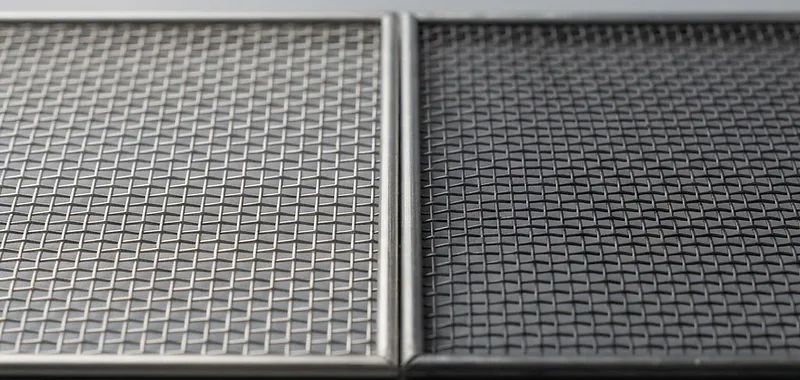
When you order a custom window screen, the mesh you choose matters more than most people realize. The two main options — fiberglass and metal mesh — look similar from a distance but perform very differently over time.
Fiberglass (standard grey mesh)
Fiberglass is the default for most homes. It's lightweight, flexible, inexpensive, and offers excellent airflow and visibility. The fine weave keeps out nearly all insects.
The downside: fiberglass stretches and sags over time, especially in larger screens and in direct sun. A cat leaning on it, a kid pressing it, or a falling branch will puncture it.
Best for: standard windows in homes without pets, and budget-conscious replacements.
Metal mesh
Metal mesh (often aluminum or a coated steel weave) is far more rigid. It won't sag, resists pet claws, and holds its shape for years longer than fiberglass. The visibility is slightly less crisp than fiberglass, but the durability difference is significant.
Best for: patio doors, homes with pets, ground-floor windows exposed to impact, and any screen you want to not replace again in two years.
The tradeoff in one line
Fiberglass gives you better visibility and a lower price; metal mesh gives you durability and a longer life. For a small upstairs bedroom window, fiberglass is usually right. For anything a pet or child can reach — and for any patio door — metal mesh pays for itself.
Not sure which to choose for each window? Get a quote and tell us which windows you're replacing — we'll recommend the right mesh per opening.