
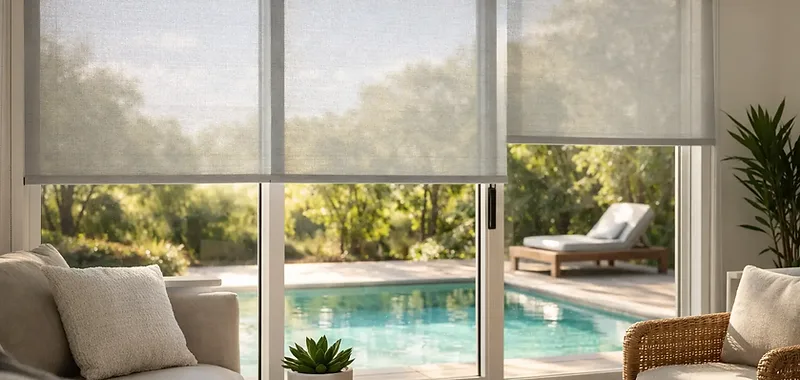
A sunny room can feel like the best room in the house - until the afternoon glare takes over the sofa, the TV becomes impossible to see, and hardwood floors or upholstery start fading. Roller shades for UV protection give homeowners a clean, practical way to manage that exposure without giving up natural light altogether.
For homes across the Lower Mainland, the need is not limited to the hottest summer days. South- and west-facing windows can bring strong sun through much of the year, while large windows, patio doors, and new-build glass walls can magnify glare and heat. The right made-to-measure roller shade helps protect your interior while making the room more comfortable to use.
How Roller Shades for UV Protection Work
Ultraviolet rays are a major cause of fading in flooring, furniture, artwork, curtains, and cabinetry. Window glass blocks some UV radiation, but it does not eliminate the issue. Sunlight also brings visible light and solar heat, both of which can contribute to glare, warmth, and long-term wear on interior finishes.
Roller shades add a fabric layer between the window and the room. Depending on the material you choose, that layer can filter harsh sunlight, diffuse bright light, reduce solar heat, and block a significant amount of UV exposure. The best option depends on what you want the room to do. A home office may need glare control while preserving an outside view. A nursery may need a darker, more private environment. A living room may need softer daylight without washing out furniture colors.
UV protection is not a one-size-fits-all claim. The fabric construction, openness level, color, window direction, and fit around the opening all influence performance. That is why a custom recommendation is more useful than choosing a shade based on appearance alone.
Start With the Windows That Take the Most Sun
You do not necessarily need the same roller shade in every room. Start by looking at where sunlight creates a daily problem. South-facing windows often receive the most consistent daylight, while west-facing windows can bring intense afternoon heat and glare. East-facing bedrooms may need help with early-morning sun, especially for shift workers or young children.
Large patio doors deserve special attention. They can brighten a home beautifully, but they also expose wide areas of flooring and furnishings to direct sun. A properly measured roller shade can make the space more usable without making the room feel closed off.
Cloudy weather does not fully remove UV concerns, either. If a particular rug, sectional, wood floor, or display area gets regular daylight, protection is worth considering even when direct sun is not always obvious.
Choosing the Right Fabric and Openness Level
The fabric is where most of the performance comes from. Roller shades are available in several material types, each with a different balance of light control, privacy, and outward visibility.
Sunscreen Fabrics for Daytime View and Glare Control
Sunscreen roller shades use an open weave that filters sunlight while allowing some view through the fabric during the day. Their openness factor describes how tightly or loosely the fabric is woven. A lower openness percentage generally means a tighter weave, more privacy, and greater light control. A higher openness percentage preserves more of the outside view but allows more light through.
For living rooms, kitchens, and offices with a view worth keeping, sunscreen fabric is often a smart middle ground. It can reduce screen glare and soften harsh sun while maintaining a bright, open feel. Keep in mind that daytime privacy is different from nighttime privacy. When interior lights are on after dark, open-weave fabrics may allow silhouettes to be visible from outside.
Light-Filtering Shades for Soft, Even Light
Light-filtering roller shades diffuse incoming daylight rather than offering a clear view through the fabric. They work well in spaces where you want brightness without sharp shadows or direct glare, such as dining rooms, family rooms, and hallways.
These fabrics can provide strong UV filtering while keeping the room welcoming. They are also a good choice when privacy matters more than seeing outdoors. Exact UV performance varies by collection, so it is worth asking for fabric specifications rather than assuming every light-filtering shade performs the same way.
Blackout Shades for Bedrooms and Media Rooms
Blackout roller shades are designed to block the light passing through the fabric. They are a practical choice for bedrooms, nurseries, media rooms, and any area where sleeping, watching a screen, or privacy takes priority over daylight.
A blackout fabric helps with UV exposure, but side gaps can still let light into the room. For the strongest room-darkening result, the shade needs accurate measurements and an installation that accounts for the window frame, mounting location, and any obstructions. Blackout does not always mean every edge of the room will be completely dark, especially with inside-mounted shades, but custom planning gets you much closer.
Color Makes a Difference, Too
Color affects both the look and function of a roller shade. Darker sunscreen fabrics can often provide a clearer view outward because they reduce reflected light on the fabric. They can be especially useful in bright rooms where glare is the biggest complaint. Lighter colors create a softer, airier look and may blend more easily with pale walls and contemporary interiors, but they can reflect more interior light and make the outdoor view less distinct.
There is no universal best color. A dark charcoal shade may be ideal for a sunny home office with expansive windows, while a warm white or soft beige may better suit a living room where the goal is gentle daylight and a calm finish. Samples are valuable because fabric color changes noticeably depending on the direction of the window and the lighting in your home.
Why Custom Fit Matters for UV Control
An off-the-shelf shade may cover most of a window, but small sizing compromises become noticeable on large openings and high-exposure windows. Gaps at the sides, uneven mounting, fabric that does not hang squarely, and hardware that interferes with operation can all affect the finished result.
Custom roller shades are measured for the specific opening and installed to suit the window frame, trim, door handle clearance, and daily use of the space. This matters particularly for sliding doors, oversized windows, and rooms where matching multiple shades creates a more polished look.
A precise fit also makes the shade easier to use. If family members have to tug at a crooked chain, fight with a shade that catches, or avoid opening a patio door because the treatment is in the way, it will not deliver much value no matter how good the fabric looks.
Four Questions to Ask Before Ordering
Before selecting roller shades, consider these practical details:
- Which windows receive direct sun, and at what time of day does it become uncomfortable?
- Do you want to preserve your daytime view, or is privacy more important?
- Are you protecting specific flooring, furniture, artwork, or electronics from fading and glare?
- Would corded, cordless, or motorized operation make the shades easier to use every day?
Motorized roller shades can be particularly useful for tall windows, hard-to-reach areas, and wide banks of glass. They also make it simple to lower shades during the strongest sun hours, even when you are busy cooking, working, or away from home. For homes with several sun-exposed windows, consistent use is one of the best ways to get the protection you paid for.
A Practical Approach to Getting It Right
Start with a remote estimate using photos and approximate dimensions, then move to an on-site measurement once the plan is approved. At the measurement appointment, an installer can confirm mounting options, note handles and trim, review fabric samples in the actual room, and make sure the shade style suits how you use the space.
Bloom Bug provides custom roller blind solutions with professional measurement and installation, helping homeowners avoid the common guesswork around fabric choice, sizing, and hardware placement. Local manufacturing also helps keep the process efficient when you want a quality result without a lengthy renovation timeline.
For regular care, a light dusting or gentle vacuum with a brush attachment is usually enough. Avoid harsh cleaners and excessive moisture unless the specific fabric instructions allow it. Keeping the shade clean helps it continue looking crisp while protecting the light-filled rooms you enjoy most.
The best roller shade is not simply the darkest one. It is the one that lets your home feel bright when you want daylight, comfortable when the sun is strongest, and protected where it matters most.